EEG report drafting time cut by 70%, and a three-week backlog cleared.
Neurologists were spending 45 to 90 minutes writing up every EEG. Now they review a draft that is already written and sign it.
- Fixed scope · 10 weeks
- 2025
- Healthcare
- AI pipeline, Clinical software
The situation
Every EEG this hospital network recorded had to be written up by a neurologist before anything could be done with it. That write-up took between 45 and 90 minutes, and there were more studies coming in each week than there were neurologist-hours to write them up.
The backlog had stretched to three weeks. Patients waited on results that were already sitting on a machine. Junior staff could technically draft a first pass, but the output varied enough that a senior physician ended up rewriting most of it, which made delegating slower than doing it directly.
The cost of the status quo was not a software cost. It was a clinical one.
What we built
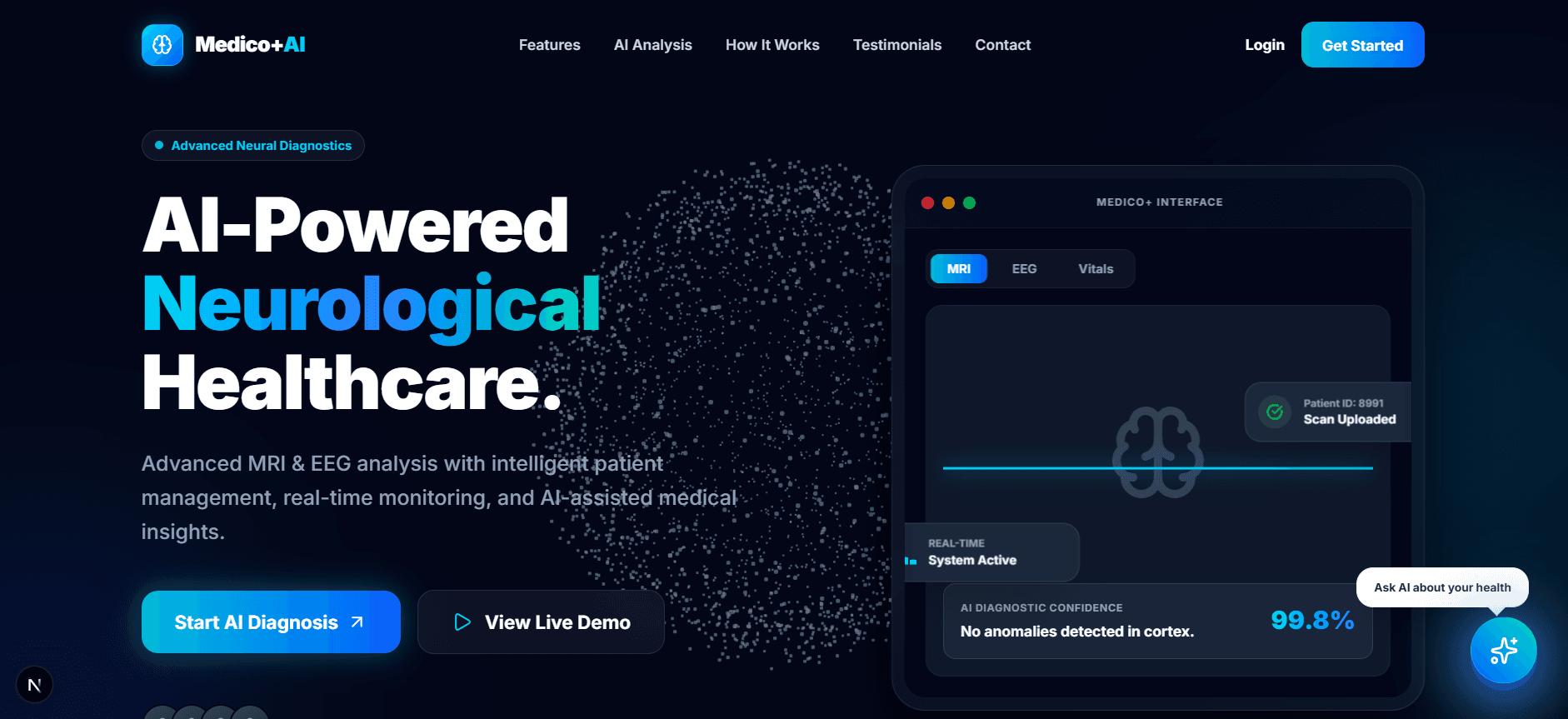
A pipeline that takes the raw EEG signal and produces a structured draft report, matched to the network's own reporting template, ready for a neurologist to read, correct and sign.
Signal classifiers handle the measurable parts of the study. A fine-tuned language model turns those findings and the technician's notes into the prose sections in the house style. Everything lands in a review interface where the physician sees the draft next to the trace it came from, edits inline, and signs — so nobody is asked to trust text they cannot check against its source.
What we deliberately left out
No autonomous reporting. The system never issues a report. A physician reviews and signs every one, and the interface is built so that skipping the review is not possible rather than merely discouraged. That was the first thing we agreed and the thing we designed everything else around.
No diagnosis. The model describes what is in the study. It does not conclude. Anything that read as a clinical judgement was cut from the output template in week two.
No integration with the hospital's records system in v1. It was on the list, and it was the largest single piece of work on the list. We shipped standalone, proved the drafting time, and left the integration for a later phase rather than delaying every benefit behind it.
The result
Drafting dropped by roughly 70% per study. The three-week backlog cleared within weeks of going live. The less expected result was consistency: because juniors now start from the same generated structure as everyone else, senior physicians spend far less time rewriting what juniors hand them.
Built with
- Python
- PyTorch
- FastAPI
- Next.js
- PostgreSQL
Have something like this?
Tell me what the problem is on a 30-minute call. If it's a fit, discovery starts with a written scope and a fixed number — not an estimate that moves.